Kneipp. Refresh. Water.

Nature can help the body to help itself: for example, with cold water in the Kneipp facility at SINNREICH in Innsbruck.

This page was translated automatically. The City of Innsbruck assumes no responsibility for the accuracy of the translation.

Content of the information board on site

What is Kneipp therapy?

Kneipp therapy is a natural healing method developed by Sebastian Kneipp around 1850. It involves the use of cold water treatments designed to stimulate the body’s self-healing powers through targeted stimulation. Exercise and diet are also integral parts of the method.

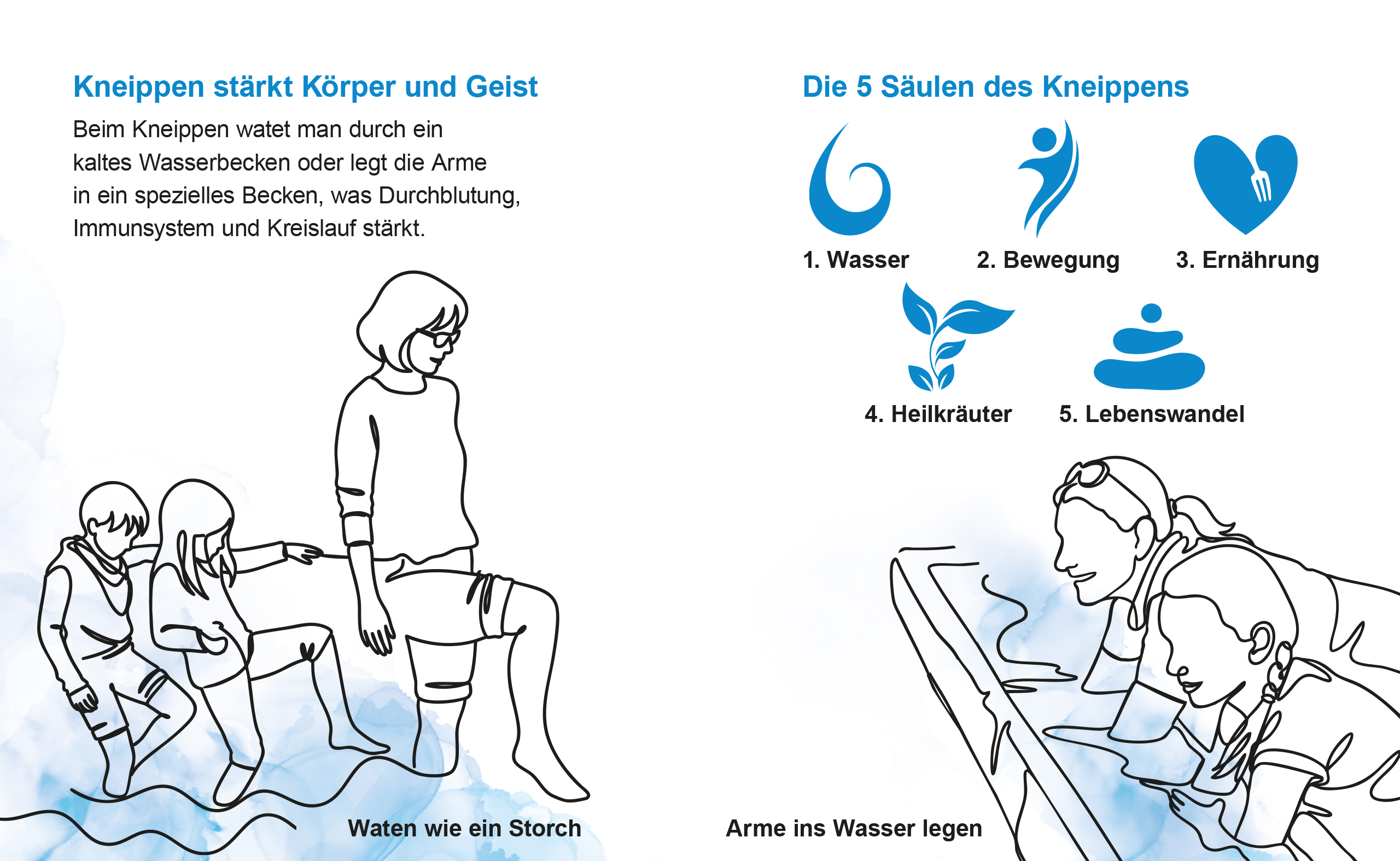
Kneipp therapy strengthens body and mind

In Kneipp therapy, you wade through a cold water basin or place your arms in a special basin, which strengthens blood circulation, the immune system and the cardiovascular system.

The 5 pillars of Kneipp therapy

  • Water
  • Exercise
  • Nutrition
  • Medicinal herbs
  • Lifestyle
Abbildung der Tafel zum Thema Kneippen. Links ist in LineArt gezeichnet, wie ein Bub, ein Mädchen und eine Frau durch das Wasser waten wie ein Storch. Ein Bein ist jeweils bis unter dem Knie im  Wasser, das andere Bein ist abgewickelt und über dem Wasser. Rechts sind Symbole der 5 Säulen eingezeichnet. Ein Tropfen für Wasser, ein Strichmännchen für Bewegung, ein Herz mit einer Gabel für Ernährung, eine Pflanze für Heilkräuter, drei organische ovale Kreise übereinander für Lebenswandel. Darunter sieht man in der rechten unteren Ecke in LineArt zwei Frauen die mit den Armen bis über dem Ellbogen in einem länglichen Tauchbecken voller Wasser sind.

On-site Kneipp information board© Stadt Innsbruck/K. Iwanowa

Abbildung der Tafel zum Thema Kneippen. Links ist in LineArt gezeichnet, wie ein Bub, ein Mädchen und eine Frau durch das Wasser waten wie ein Storch. Ein Bein ist jeweils bis unter dem Knie im  Wasser, das andere Bein ist abgewickelt und über dem Wasser. Rechts sind Symbole der 5 Säulen eingezeichnet. Ein Tropfen für Wasser, ein Strichmännchen für Bewegung, ein Herz mit einer Gabel für Ernährung, eine Pflanze für Heilkräuter, drei organische ovale Kreise übereinander für Lebenswandel. Darunter sieht man in der rechten unteren Ecke in LineArt zwei Frauen die mit den Armen bis über dem Ellbogen in einem länglichen Tauchbecken voller Wasser sind.

On-site Kneipp information board© Stadt Innsbruck/K. Iwanowa

Further information

Kneipp therapy is a natural method designed to promote health. It was developed in the 19th century by Sebastian Kneipp. He was a priest in Bavaria and conducted extensive research into water treatments. His aim was to strengthen the body’s self-healing powers.

What is the best-known form of Kneipp therapy?

The best-known form of Kneipp therapy is water treading. This involves walking barefoot through cold water. You lift your legs slowly out of the water, much like a stork, and then place them back in again. The cold water stimulates the body, promotes blood circulation and strengthens the blood vessels. After water treading, the feet warm up again. This is said to support circulation.

What other Kneipp treatments are there?

As well as water treading, there are other treatments. These include arm baths, pouring water over the body or cold washes. It is important that the treatments are brief . The water should be cold, but not painful. After each treatment, you should move around so that your body warms up again.

Kneipp therapy is not just about water. It is based on five pillars:

  1. The first pillar is water.
  2. The second pillar is exercise. Regular exercise keeps the body fit.
  3. The third pillar is a healthy and balanced diet. Fresh and natural foods play an important role in this.
  4. The fourth pillar is medicinal plants. Herbs can support your well-being.
  5. The fifth pillar is known as ‘lifestyle’. This refers to a balanced way of life. It includes sufficient sleep, rest and a regular daily routine.
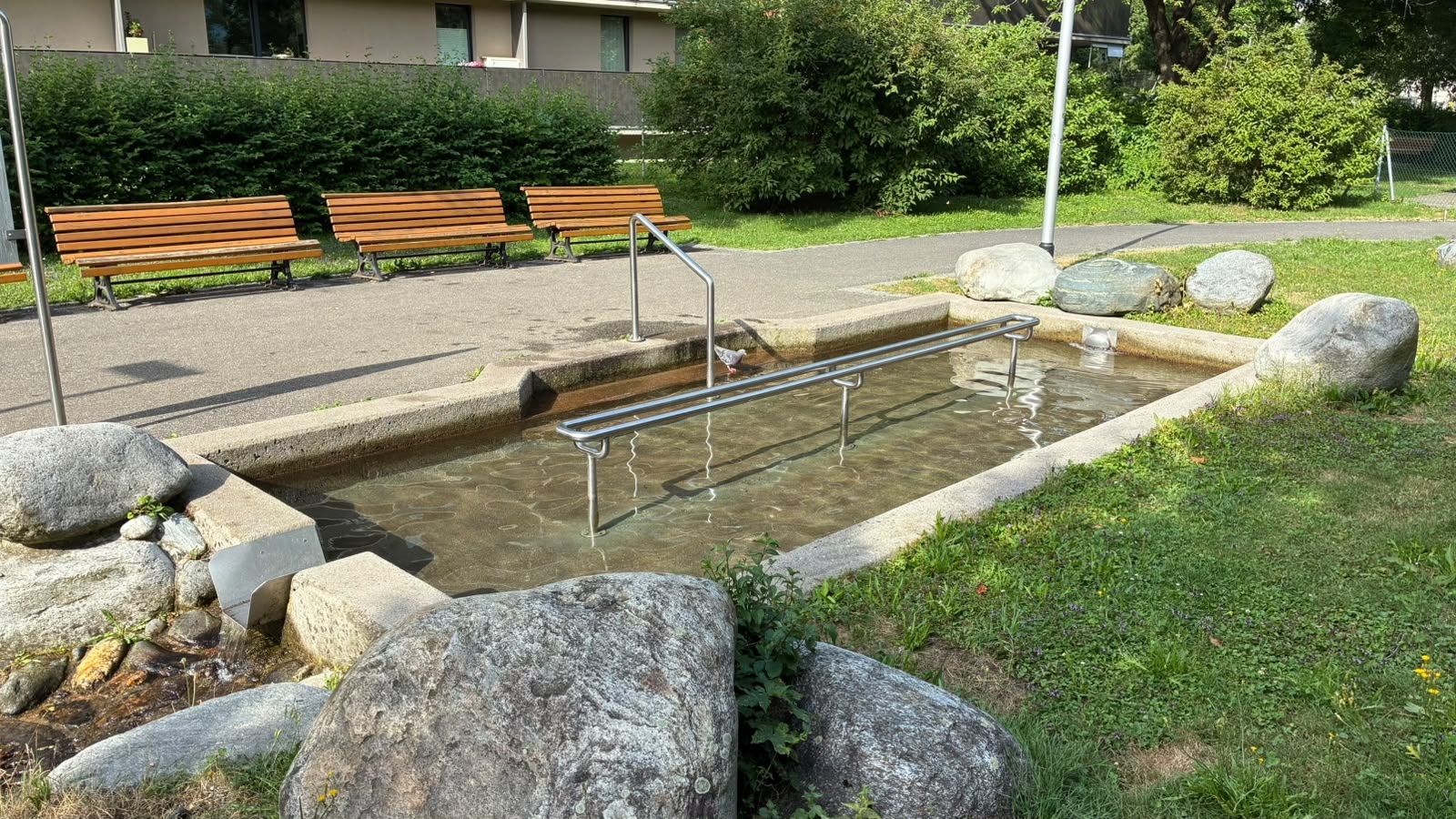
Ein Foto eines rechteckigen Kneipp-Tretbeckens im Freien. Zwei Handläufe aus Edelstahl sind montiert: einer führt vom Weg auf der linken Seite herab, und ein zweiter, paralleler Handlauf verläuft mittig über die gesamte Länge des Beckens, um Stabilität beim Gehen zu bieten. An der Vorderkante fließt Wasser über eine Metallrinne in einen tiefer liegenden Abfluss. Die Anlage ist von Gras und mehreren großen, abgerundeten Flusssteinen umgeben. Im Hintergrund sieht man drei Holzbänke.

The Kneipp pool, where you can wade through the water like a stork. © Stadt Innsbruck/W. Grünzweig

Ein Foto eines rechteckigen Kneipp-Tretbeckens im Freien. Zwei Handläufe aus Edelstahl sind montiert: einer führt vom Weg auf der linken Seite herab, und ein zweiter, paralleler Handlauf verläuft mittig über die gesamte Länge des Beckens, um Stabilität beim Gehen zu bieten. An der Vorderkante fließt Wasser über eine Metallrinne in einen tiefer liegenden Abfluss. Die Anlage ist von Gras und mehreren großen, abgerundeten Flusssteinen umgeben. Im Hintergrund sieht man drei Holzbänke.

The Kneipp pool, where you can wade through the water like a stork. © Stadt Innsbruck/W. Grünzweig

How can the Kneipp method promote good health?

Kneipp therapy is said to strengthen the immune system. Many people feel refreshed and revitalised afterwards. It is said to help prevent colds. It is also often used to treat tired legs or mild circulatory problems .

When is the Kneipp method not suitable?

Kneipp therapy is not suitable for everyone. People with severe heart or vascular conditions should seek medical advice beforehand. If you have a fever or acute inflammation, you should avoid cold treatments.
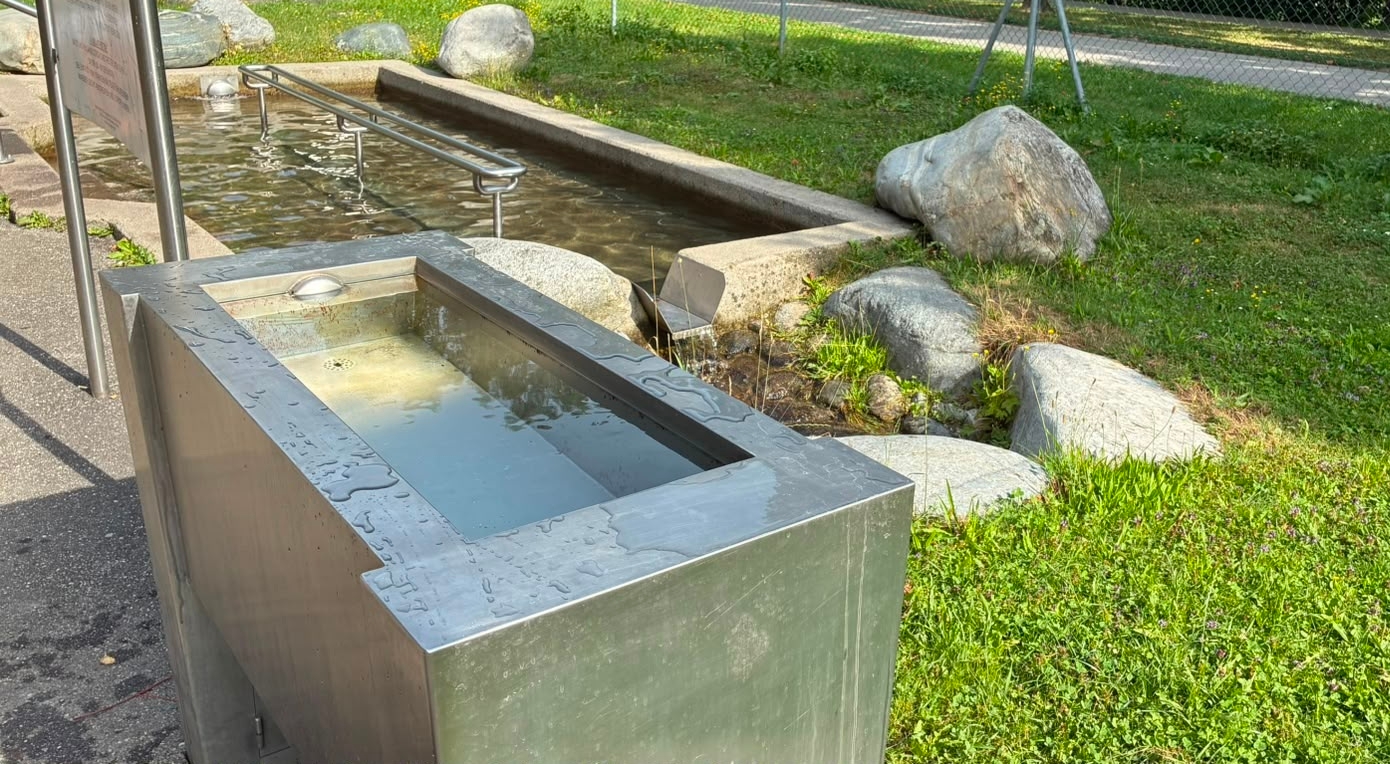
Ein rechteckiges, freistehendes Kneipp-Arm-Badebecken aus Edelstahl, das am Rand eines asphaltierten Weges steht. Der Trog ist mit klarem Wasser gefüllt. Rechts vom Becken befindet sich eine Grünfläche mit großen Flusssteinen. Im Hintergrund ist ein breiteres, flaches Kneipp-Tretbecken mit Edelstahl-Handläufen zu erkennen.

A dip for your arms.© Stadt Innsbruck/W. Grünzweig

Ein rechteckiges, freistehendes Kneipp-Arm-Badebecken aus Edelstahl, das am Rand eines asphaltierten Weges steht. Der Trog ist mit klarem Wasser gefüllt. Rechts vom Becken befindet sich eine Grünfläche mit großen Flusssteinen. Im Hintergrund ist ein breiteres, flaches Kneipp-Tretbecken mit Edelstahl-Handläufen zu erkennen.

A dip for your arms.© Stadt Innsbruck/W. Grünzweig

Kneipp therapy: simple and inexpensive

Kneipp therapy is simple and affordable. All you usually need is water and a little time. The method relies on natural stimuli and a mindful lifestyle.

Where can you find Kneipp facilities in Innsbruck?

The City of Innsbruck provides the Kneipp facility on the Romuald-Raoul-Niescher Promenade as well as the one in Igls ( Eichlerstraße 17). You can find the locations on the city map: