Content of the information board on site
It’s always exciting to explore the neighbourhood where you live or are currently walking through. Let’s have a look around here and discover what used to be in the area – and what wasn’t there back then.
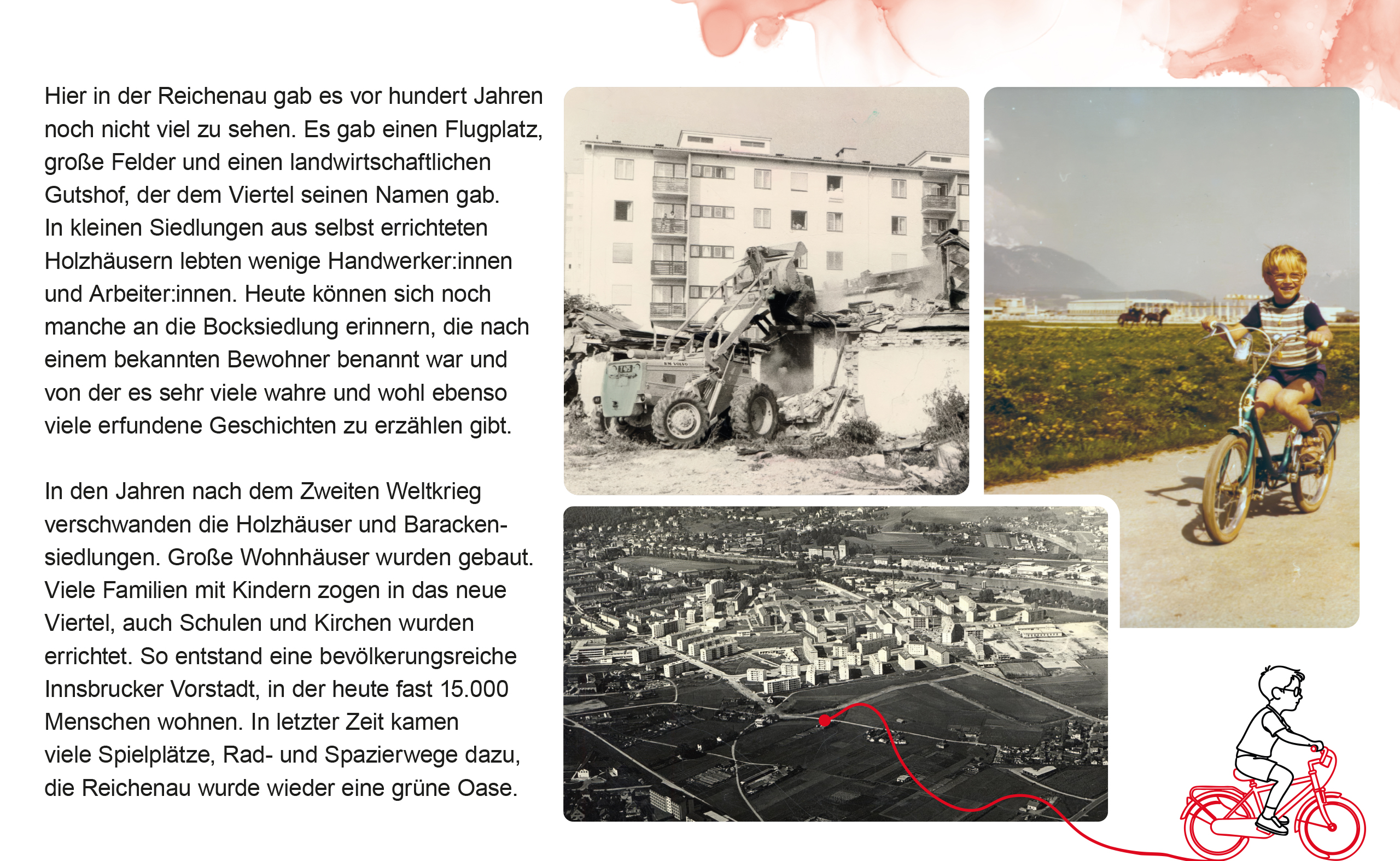
On-site historical information board© Stadt Innsbruck/K. Iwanowa
A hundred years ago, there wasn’t much to see here in Reichenau. There was an airfield, large fields and a farmstead that gave the neighbourhood its name. A handful of craftspeople and labourers lived in small settlements made up of wooden houses they had built themselves. Today, some people still remember the ‘Bocksiedlung’, which was named after a well-known resident and about which there are many true stories – and probably just as many made-up ones – to tell.
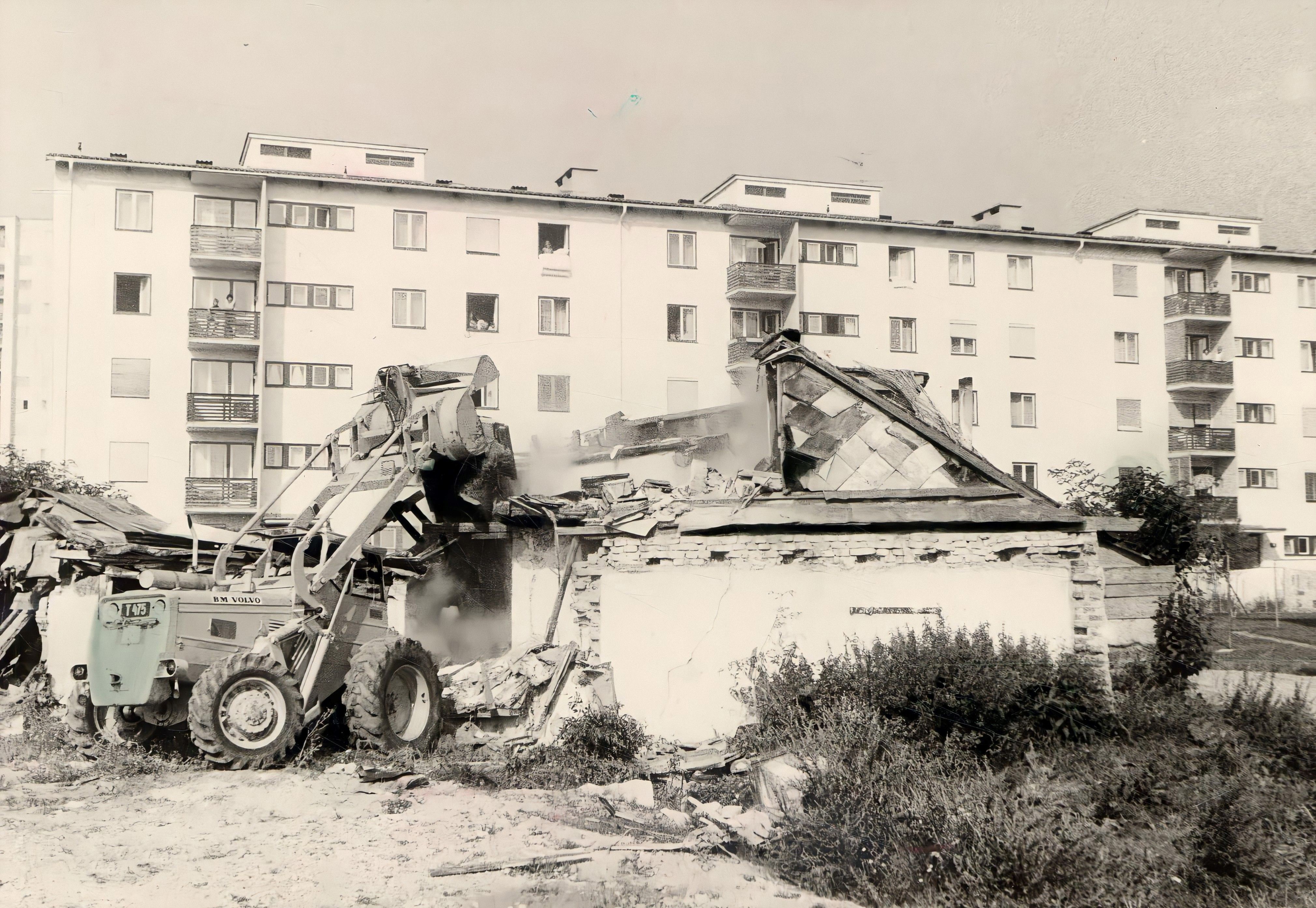
© Stadtarchiv Innsbruck
In the years following the Second World War, the wooden houses and shanty towns disappeared. Large blocks of flats were built. Many families with children moved into the new neighbourhood, and schools and churches were also built. This gave rise to a densely populated suburb of Innsbruck, which is now home to almost 15,000 people. Recently, many playgrounds, cycle paths and footpaths have been added, and Reichenau has once again become a green oasis.
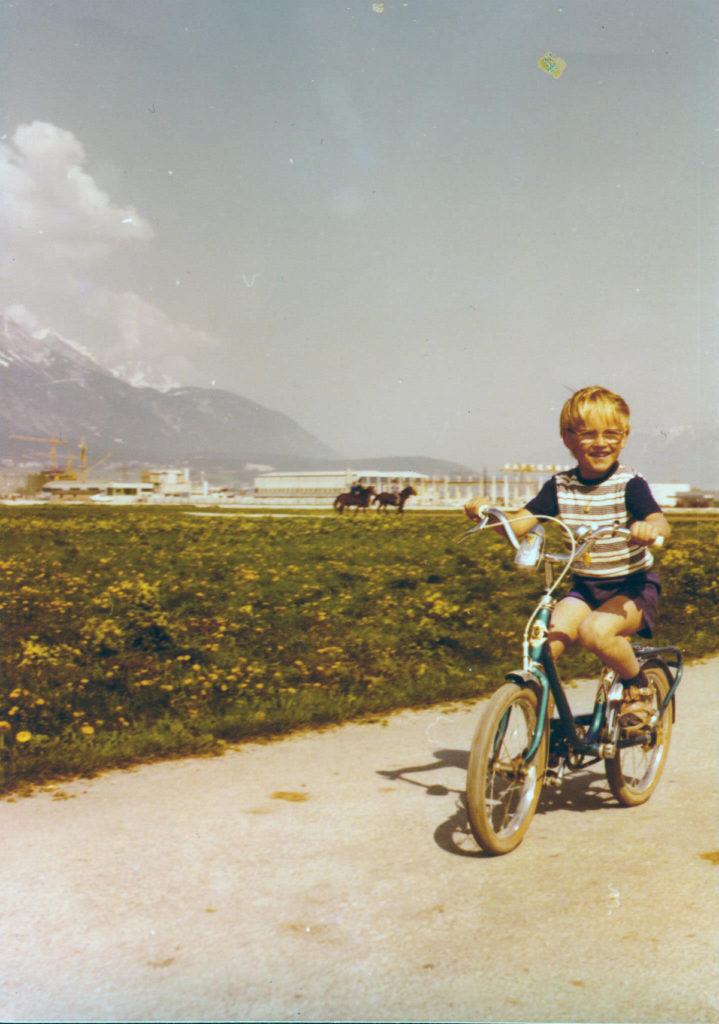
Harald Pinggera cycling across the Rossau plains in the 1970s. This is where the Grabenweg is located today. In the background is the Katzenberger company, which manufactures precast concrete elements. © Stadtarchiv Innsbruck/Familienarchiv Pinngera
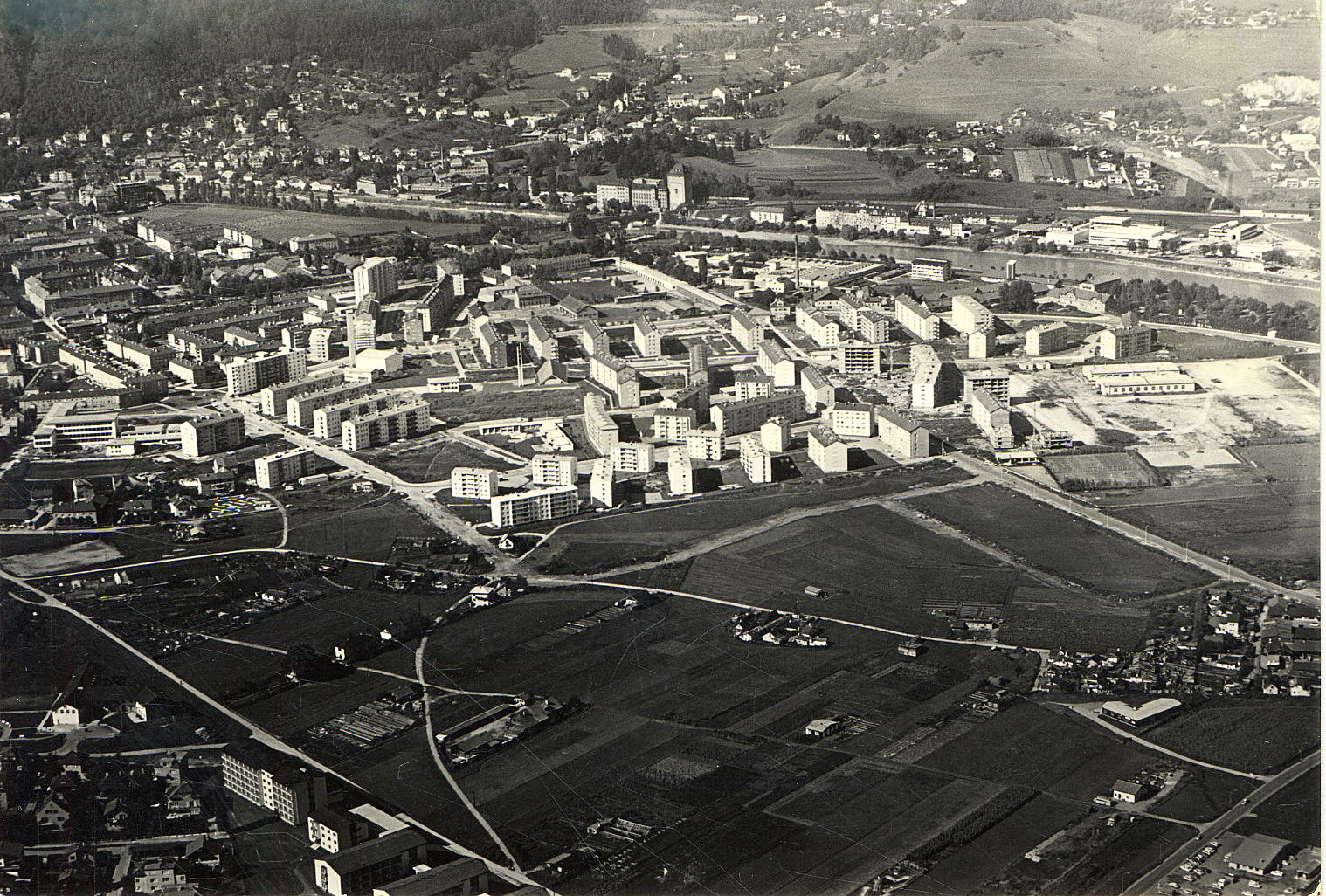
Changes in Reichenau in the early 1960s: Richard Frischauf’s aerial photograph shows Reichenau’s transformation from a sparsely populated village of huts and barracks into a modern satellite town.© Stadtarchiv Innsbruck/Richard Frischauf
Further information
The Innsbruck City Archives’ photo blog, innsbruck-erinnert.at, regularly features new posts on the history of Innsbruck. Here you will find a selection of articles on Reichenau – including further details on the images shown on the display board:
- Local history at Lago di Baggers (child on a bicycle)
- In the satellite town (aerial view)
- [Reichenau] Airport and more
- The Tyrolean Loden Case
- The Lustschlössl in Reichenau – The Estate in Reichenau, Part I
- Cow dung on the runway – The Reichenau Estate, Part II
- The most beautiful barracks building in Tyrol – The Gutshof in Reichenau, Part III
- The Reichenau Estate, Part IV – Learning by Doing