In addition to the numerous general training and advanced training courses for members of the Innsbruck professional fire department, there are some special areas for particularly challenging operations.
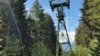
A rescue exercise at the cable car.© Berufsfeuerwehr Innsbruck
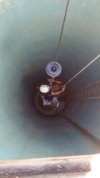
A high-altitude rescue in the canal.© Berufsfeuerwehr Innsbruck
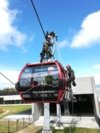
A firefighter taking part in a rescue drill on a gondola of the Patscherkofel cable car.© Berufsfeuerwehr Innsbruck
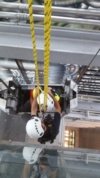
A rescue from the lift.© Berufsfeuerwehr Innsbruck


Rescue from heights
If people need to be rescued from high or low altitudes, the Innsbruck Fire Department's high-altitude rescuers are deployed. This does not include emergencies in the mountains, but rather, for example, medical emergencies involving crane operators, suicide attempts, rescue and extrication of people or animals from forced situations at heights and depths, as well as rescue operations from silos or gondolas.
At least two height rescuers are on duty around the clock at the Innsbruck professional fire brigade.
How do you become a height rescuer?
Every member of the fire brigade is trained to work safely in areas where there is a risk of falling. The height rescuers complete additional training and continuously practise special rescues from heights and depths. This enables them to keep a cool head even at dizzying heights.
What equipment is used?
In addition to intensive specialised training, special equipment is also required for rescue operations at heights and depths. Every operation is different - which is precisely why the Innsbruck professional fire brigade needs a wide variety of equipment to set up abseiling points, pulleys, ropeways, etc.
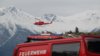
The Innsbruck Professional Fire Brigade during a helicopter operation in the mountains.© Berufsfeuerwehr Innsbruck
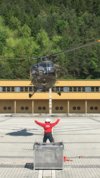
The Innsbruck Fire Brigade is directing another helicopter.© Martin Tiefnig
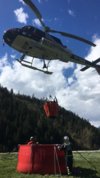
The Innsbruck Professional Fire Brigade on a fire-fighting operation involving a helicopter.© Martin Tiefnig


Flight service
The Innsbruck professional fire brigade does not have its own helicopter, but helicopters are still used for fire brigade operations. For example, for fighting forest fires or water operations.
Forest fires are a particular challenge in Innsbruck's mountainous terrain. Back in the 1970s, the Innsbruck professional fire brigade was a pioneer in fighting forest fires with helicopters. Today, it is impossible to imagine fighting forest fires without support from the air. Flight assistants organise the landing site, brief the emergency crew, prepare load flights and are in contact with the helicopter via radio.
At least two flight assistants are on duty around the clock.
How do you become a flight assistant?
Every group commander completes training to become a flight assistant and takes part in regular further training. Flight assistants are trained in handling aircraft.
What equipment is used?
The Innsbruck professional fire brigade has various devices and a specially designed vehicle called "Fliege" for this special service.
_verkleinert-100x56.jpg)
The diving unit of the Innsbruck Professional Fire Brigade, which is also on duty in winter.© Berufsfeuerwehr Innsbruck
_verkleinert-100x56.jpg)
The diving unit of the Innsbruck Professional Fire Brigade during a drill.© Berufsfeuerwehr Innsbruck
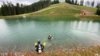
Diving operation by the Innsbruck Professional Fire Brigade at a lake.© Berufsfeuerwehr Innsbruck, Andreas Birsak
_verkleinert-1600x900.webp)
_verkleinert-2560x1440.webp)

Diving service
Divers from the Innsbruck professional fire brigade have already been called out to missions in crevasses, dam reservoirs and mountain lakes as well as in flowing waters.
At least two divers from the Innsbruck professional fire brigade are on duty around the clock.
How do you become a diver?
In addition to the mandatory lifeguard training for all firefighters, divers complete three further training stages with around fifty practice dives. In addition, they must demonstrate at least ten diving hours per year.
What equipment is used?
The Innsbruck professional fire brigade has a water rescue vehicle and a diving vehicle.
_verkleinert-100x56.jpg)
The water cannon unit of the Innsbruck Professional Fire Brigade in action.© Berufsfeuerwehr Innsbruck
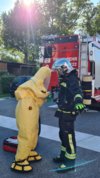
A drill by the water cannon unit of the Innsbruck Professional Fire Brigade© Daniel Fürhapter
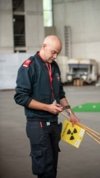
A man from the Innsbruck Fire Brigade, pictured holding a yellow sheet of paper and the word ‘Radioactive’.© LFV Wegscheider
_verkleinert-2560x1440.webp)


Radiation service
There are two main reasons why Innsbruck needs radiation protection experts: Firstly, there are companies and medical facilities in Innsbruck that work with radioactive substances and radiation sources. Secondly, radioactive materials are also transported through Innsbruck.
At least two radiation protection experts from the Innsbruck professional fire brigade are on duty around the clock.
How do you become a radiation protection expert?
During training, you practise locating a radiation source, handling transported goods (which contain radioactive material) and decontaminating contaminated clothing or persons.
What equipment is used?
The professional fire brigade in Innsbruck is equipped with numerous measuring devices for a contaminant operation with radioactive material.